Interdisciplinary Design Coordination
Develop AI Agent Skills from how coordination leads connect an interface conflict to the assumptions and responsibilities of each design discipline. Help an agent prepare a coordination brief with relevant revisions, earlier reasoning, and questions for the discipline owners.
Project architects, engineers, and coordination leads
A resolved interface conflict returns in a new model
Keep the reasoning behind an interface resolution available
A clash marker shows where the question starts
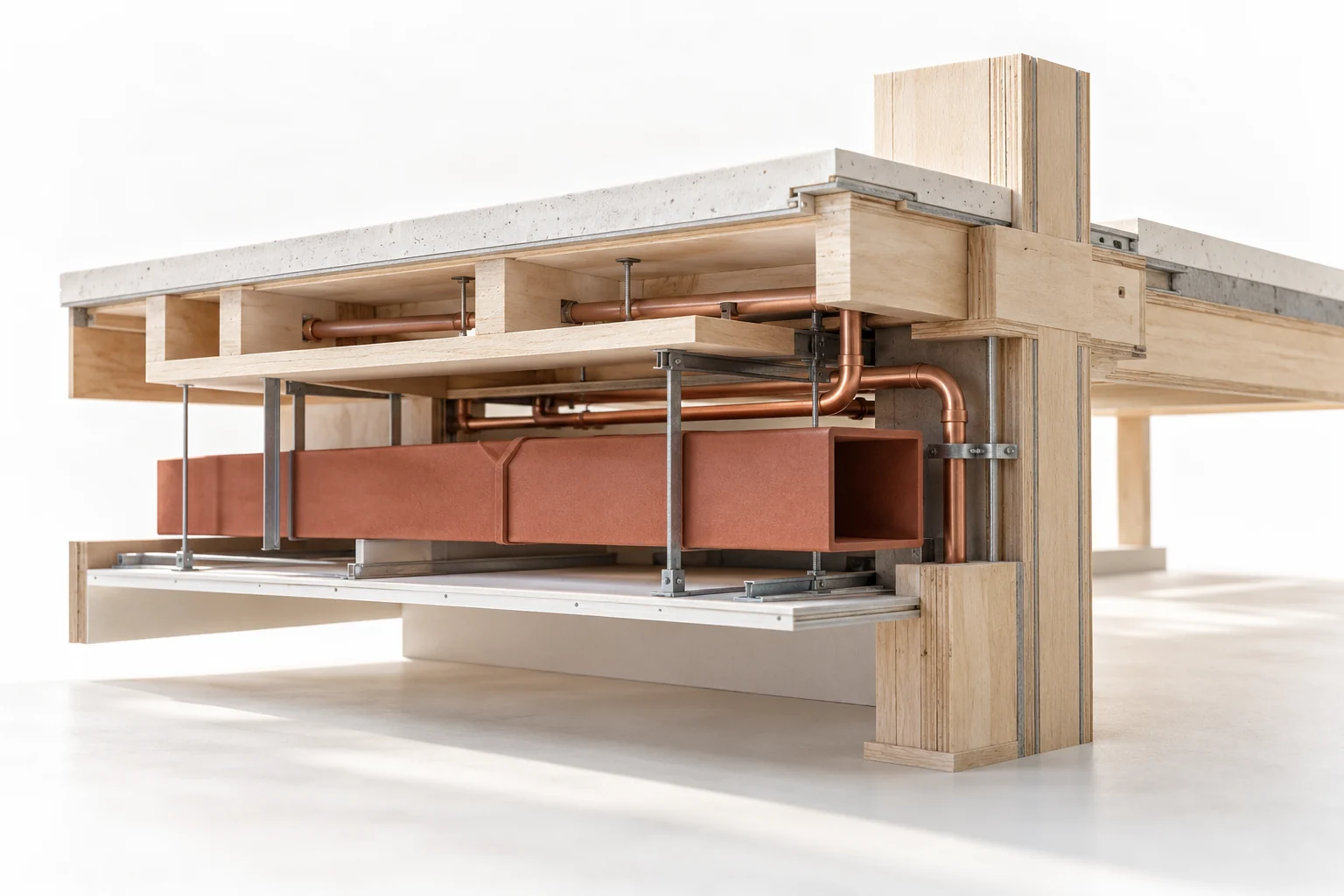
A services route conflicts with a structural zone after a model revision. A similar interface was discussed earlier, but the coordination log records only the chosen geometry. The team needs the clearance assumptions, ownership, and reasons behind the earlier resolution.
Connect the model issue to the people who can resolve it
An interface conflict has returned after a model revision. Connect the current issue to earlier assumptions and the discipline owners who can resolve the remaining questions.
Establish which revisions belong in the comparison
Connect the issue to the model versions, location, and affected disciplines. Preserve whether the apparent conflict reflects a current design change or inconsistent source information.
Are the teams reviewing the same location and revision?
Recover the assumptions behind the previous solution
Capture why the earlier arrangement was accepted and which access, clearance, or sequencing assumptions shaped it. Flag changed conditions for the responsible specialist.
Which earlier assumption no longer holds in this revision?
Prepare the unresolved interface for its owners
Organize the affected requirements, options discussed, and assigned actions. Keep proposed arrangements separate from approved coordination outcomes so the next team can see what still needs review.
Which discipline owns each unanswered part of the interface?
Appointed architects and engineers approve design changes and verify technical requirements within their disciplines.
Capture how a coordination issue became resolvable
Walk through a closed interface issue with the coordination lead and relevant disciplines. Record the information that changed the discussion and the responsibilities that made the resolution workable. Develop a skill that prepares the next coordination review.
Explore AI Skill Engineering- Coordinated model revisions
- Interface issue and review history
- Discipline requirements and assigned actions
Start with an interface issue that kept returning
Bring the relevant model revisions, issue history, and the specialists who explained the resolution. Explore how their reasoning could become a reviewed AI Agent Skill.