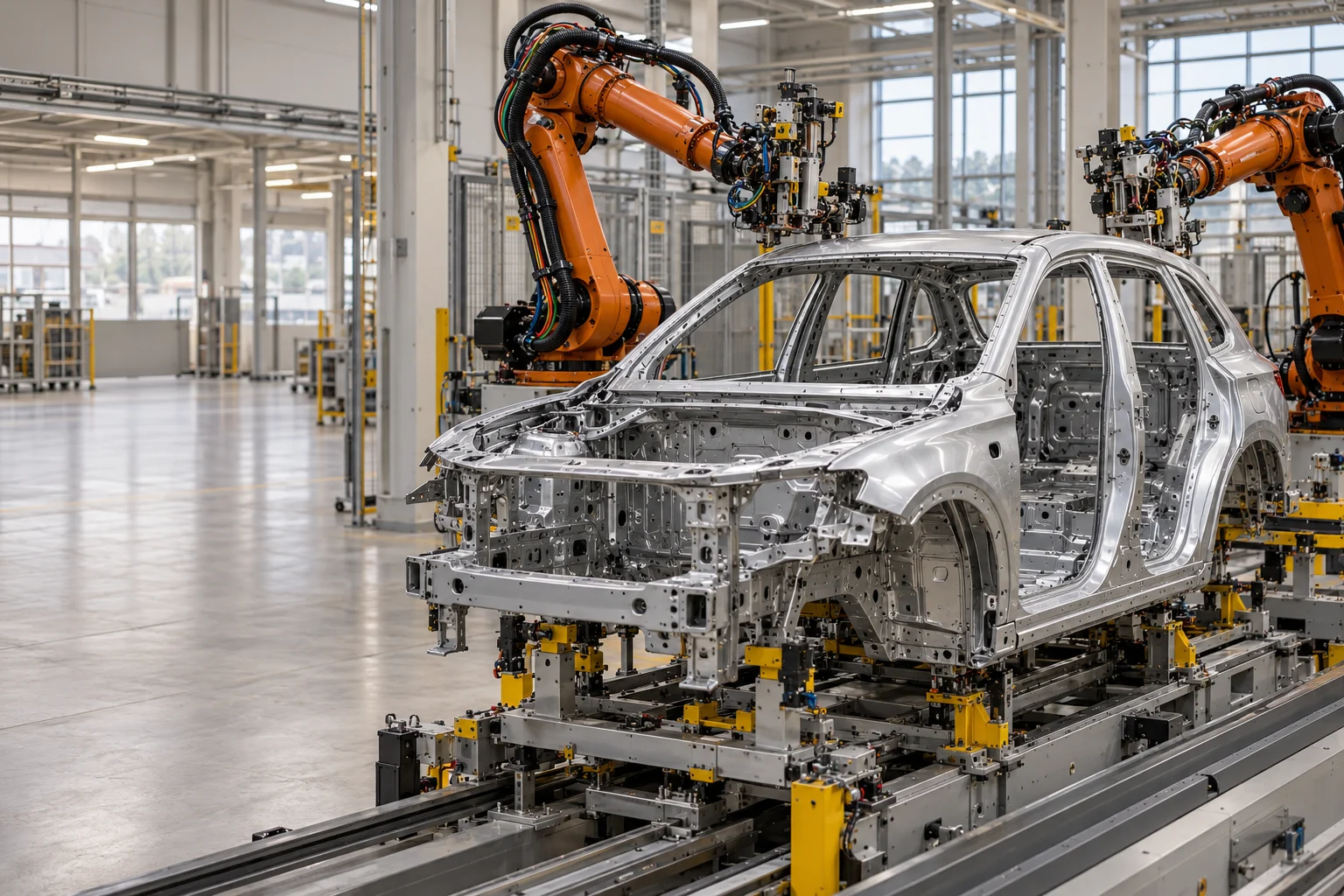
Ford
Ford could capture how experienced assembly and service technicians connect unusual symptoms to production conditions and repair history. RapidKT could turn that diagnostic reasoning into AI Agent Skills that help teams investigate recurring issues, prepare technical escalations, and carry proven troubleshooting knowledge between plants and service organizations.
Company website ↗

General Motors
General Motors could develop AI Agent Skills from the judgment behind vehicle launch readiness and assembly-line troubleshooting. RapidKT could help agents connect engineering changes, supplier concerns, and validation findings, giving launch teams a clearer view of unresolved issues and the reasoning behind earlier production decisions.
Company website ↗

Tesla
Tesla could capture the reasoning engineers use to investigate battery-pack assembly and end-of-line test exceptions. RapidKT could structure that expertise into AI Agent Skills that connect test results, equipment history, and process changes, helping specialists distinguish a repeatable pattern from a new manufacturing problem.
Company website ↗

Rivian
Rivian could preserve the practical knowledge learned while introducing electric vehicle programs and refining production processes. AI Agent Skills built in RapidKT could help connect launch issues, service observations, and engineering responses, keeping the rationale behind fixes available to the teams handling the next similar case.
Company website ↗

Lucid Motors
Lucid Motors could capture specialist knowledge about electric powertrain testing and vehicle diagnostic escalations. RapidKT could turn the relationships between symptoms, test conditions, and prior engineering findings into AI Agent Skills that help teams prepare more focused investigations and maintain continuity between manufacturing and service support.
Company website ↗

Magna
Magna could turn expertise from component engineering and vehicle manufacturing into AI Agent Skills for production launches. RapidKT could help teams preserve the reasoning behind tooling adjustments, assembly exceptions, and customer-specific requirements, making that knowledge easier to reuse as programs move between plants and engineering groups.
Company website ↗

Lear
Lear could capture how specialists troubleshoot seating assemblies and vehicle electrical systems when defects cross component boundaries. AI Agent Skills developed in RapidKT could help teams connect test failures, supplier changes, and assembly observations, then prepare a focused handoff for the engineer responsible for resolving the issue.
Company website ↗

BorgWarner
BorgWarner could preserve the engineering judgment behind powertrain component validation and manufacturing quality reviews. RapidKT could turn test interpretation, process exceptions, and failure-analysis lessons into AI Agent Skills that help teams compare cases and explain why an issue needs additional testing or specialist attention.
Company website ↗
Dana
Dana could capture the diagnostic knowledge behind drivetrain durability, vibration, and assembly-quality investigations. RapidKT could help create AI Agent Skills that organize operating conditions, inspection results, and component history, giving engineering and service teams a shared explanation of what has been checked and what remains unresolved.
Company website ↗

Gentex
Gentex could turn expertise in automotive vision systems, dimmable glass, and electronics testing into AI Agent Skills. RapidKT could help specialists connect optical symptoms, calibration records, and manufacturing observations, preserving the reasoning needed to investigate a difficult defect across design, production, and customer support.
Company website ↗