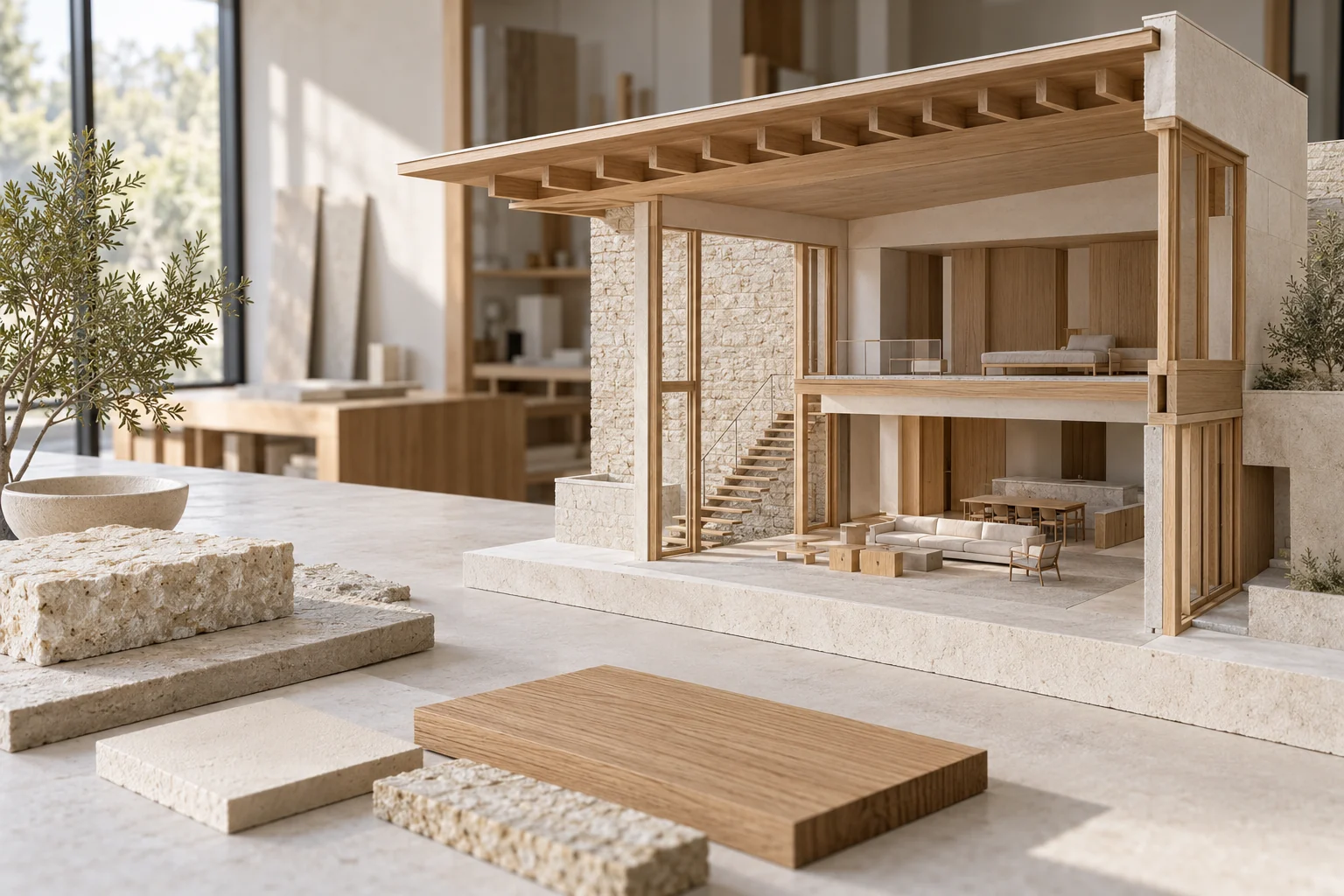
01/Design development
Design Intent Handoff
The model shows the choice. The team needs its purpose
Help an agent prepare a design-intent brief that connects the current proposal to its rationale and unresolved requirements.
- Evidence to connect
- Reviewed brief and concept studies, Decision notes and design alternatives, Current model and open requirements.
- Reasoning to capture
- How architects and designers explain the objectives and tradeoffs behind an agreed design direction.
Explore this use case →
02/Discipline interfaces
Interdisciplinary Design Coordination
A clash marker shows where the question starts
Help an agent prepare a coordination brief with relevant revisions, earlier reasoning, and questions for the discipline owners.
- Evidence to connect
- Coordinated model revisions, Interface issue and review history, Discipline requirements and assigned actions.
- Reasoning to capture
- How coordination leads connect an interface conflict to the assumptions and responsibilities of each design discipline.
Explore this use case →
03/Specifications
Material Specification Review
A similar appearance is only part of the comparison
Help an agent assemble a substitution comparison with source references, missing information, and the reasons the original material was chosen.
- Evidence to connect
- Current specification and intended use, Approved and proposed product evidence, Sample reviews and maintenance requirements.
- Reasoning to capture
- How specifiers connect material choices to design intent, documented requirements, and the evidence needed for review.
Explore this use case →
04/Revision review
Design Change Impact Review
A small mark on a drawing can reopen several decisions
Help an agent prepare an impact brief that identifies connected records, assumptions to revisit, and the reviewers needed before agreement.
- Evidence to connect
- Change request and current drawings, Affected interfaces and requirements, Prior approvals and decision history.
- Reasoning to capture
- How design managers trace a proposed revision through related requirements, interfaces, and earlier decisions.
Explore this use case →
05/Project learning
Post-Occupancy Design Learning
The next project needs the lesson and its conditions
Help an agent prepare a learning brief that connects observations, design rationale, and questions for the responsible team.
- Evidence to connect
- Original design intent and studies, Authorized occupant feedback, Observed use and facilities records.
- Reasoning to capture
- How design teams compare a building’s use with its original assumptions and distinguish a transferable lesson from a local circumstance.
Explore this use case →