Research & Development

Project Eden

Cognitive Engineering and Applied Neuroplasticity

Engineering the conditions for deeper learning

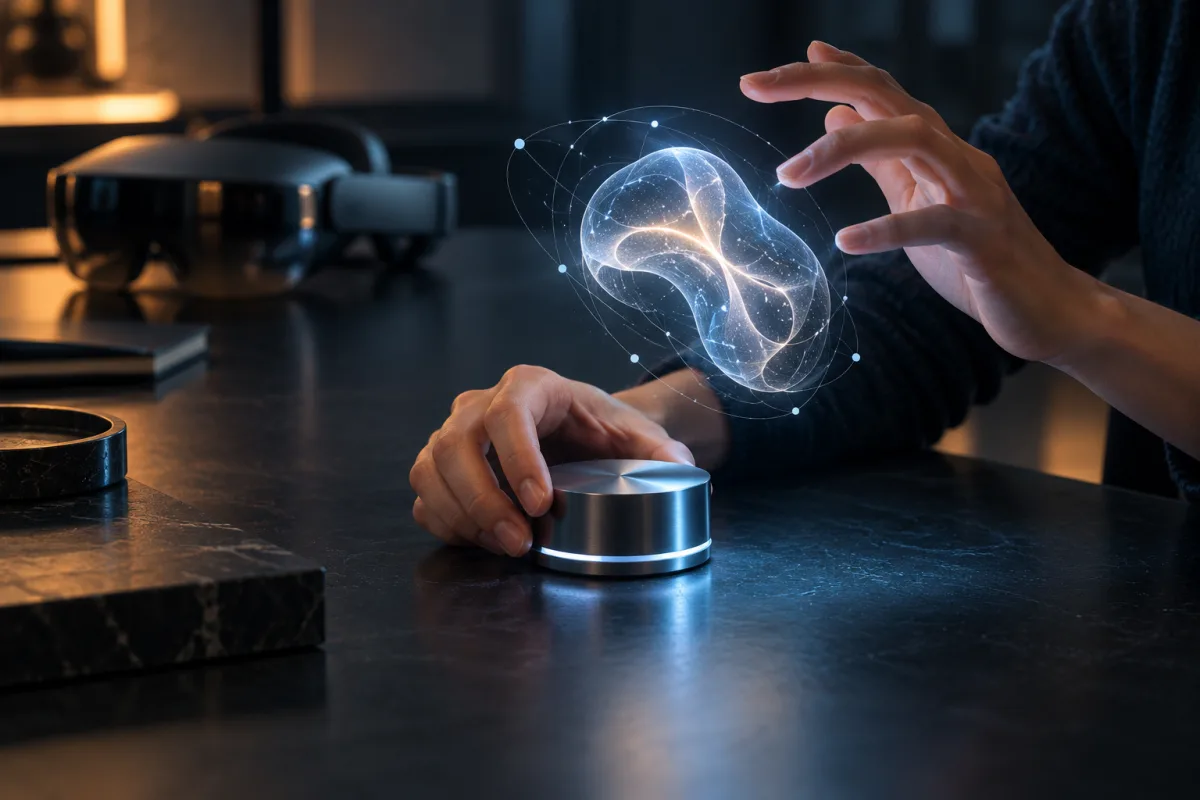
Conceptual neural architecture formed from branching blue and gold fibers
Neural pathways Concept visualization

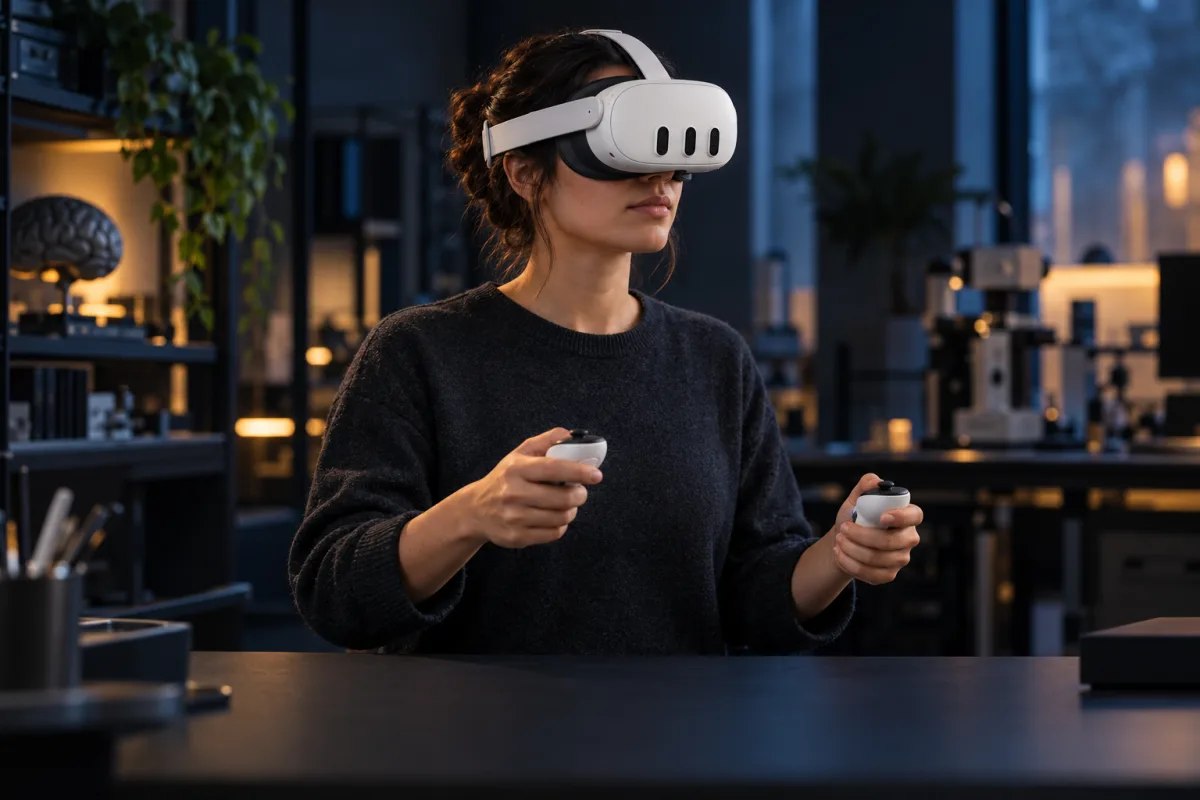
Our work began with transferring human expertise to AI agents. Project Eden now explores the reverse: transferring expertise from AI agents to humans. We investigate how immersive experiences, interactive hardware, deliberate practice, and AI-guided learning can help people build lasting knowledge, develop judgment, and apply what they learn independently.

Our prototypes explore how interaction, practice, and feedback shape learning.

Design
Attention, decisions, and feedback
Practice
Predict, experiment, and revisit
Research goals
Retention, reasoning, and transfer

01 / Research focus

Design the experience. Study what carries forward

What should a learner notice, decide, and practice? What should happen when a prediction is wrong? Eden treats these as design questions. The environment, the task, and the feedback all shape the learning experience.

The next question is what remains afterward. We want to investigate whether learners can recall an idea later, explain the relationships behind it, and use it in an unfamiliar situation.

Cognitive Engineering

We design tasks and interfaces around the thinking they ask people to do. Spatial models make relationships available to inspect. Controls let learners test a prediction. Feedback helps them connect an action to its consequences and revise their explanation.

Applied Neuroplasticity

Neuroplasticity is the brain's capacity to change with experience. Our applied research asks how deliberate practice, feedback, and revisiting ideas can inform experiences that develop durable skills. Retention and transfer are central questions for evaluation.

02 / Research prototypes

A concrete place to investigate learning

Selected concepts from physics and space science give us practical settings for investigating learning. Each experience pairs an abstract idea with actions and observable outcomes, letting learners test predictions, interpret feedback, and revise their understanding.

4 research experiences

Concept illustration of galaxies connected by the cosmic web Concept visualization

Explore / Cosmic expansion

Expanding Universe Lab

Learners control a model of expanding space, inspect galaxies, and compare the light reaching them. The task is to connect observations with a relationship between distance and motion.

Recognizing patterns and interpreting evidence.

Concept illustration of a star's glowing surface and plasma arcs Concept visualization

Experiment / Stellar life cycles

Star Forge

Learners choose a star's starting mass and follow its life cycle. Comparing different masses, four stellar endings, and a mystery star gives them a way to test and revise a causal explanation.

Predicting outcomes and reasoning about cause and effect.

Concept visualization of luminous particles interacting in plasma Concept visualization

Build / Nuclear fusion

Fusion Reactor

Learners manipulate protons in a simulation and experiment with heat and pressure. They investigate the conditions for fusion by changing inputs, observing results, and adjusting their approach.

Testing hypotheses and solving problems through iteration.

Recall / Explain / Revisit

Cosmic Quiz

Ten-question rounds combine recall with hints, diagrams, and explanations. Study guides offer a closer look at each concept, and spaced review brings difficult topics back into practice.

Retrieving knowledge and correcting misunderstandings.

These experiences support research in Cognitive Engineering and Applied Neuroplasticity. We choose what to build around questions about attention, memory, reasoning, and knowledge transfer. Those questions guide the next prototype.

03 / Learning design

Make the learner's reasoning part of the experience

Eden's design connects observation, action, feedback, and reflection. Immersive scenes provide a setting for a task. Learners make decisions within it, examine the consequences, and return to the underlying idea. This sequence guides how we develop the prototypes and frame future evaluation.

  1. Attend

    Direct attention to a meaningful relationship. Give the learner a question to investigate and a model they can inspect.

  2. Experiment

    Invite a prediction, then a change to a variable. Make the result visible so the learner can compare it with their expectation.

  3. Revisit

    Ask the learner to retrieve an idea, use feedback, and return to it over time. Vary the task as understanding develops.

  4. Explain

    Ask for an explanation, a diagram, or a solution to a new problem. These activities help us examine what carries beyond the simulation.

04 / Learning data

From interaction data to human intelligence

Every prototype generates a wealth of behavioral data when a person uses it. Performance, decisions, response times, mistakes, retries, and requests for help trace how someone works through a problem. Across repeated sessions, these signals can help us investigate how their approach changes with practice.

This makes each prototype a research instrument for Cognitive Engineering and Applied Neuroplasticity. We want to study these signals to understand which conditions help people build stronger mental models, reason through unfamiliar problems, and retain what they learn. The goal is to use that evidence to design experiences that build human intelligence.

Let the evidence shape the next prototype

We want these observations to guide the next iteration of immersive experiences, interactive hardware, deliberate practice, and AI guidance. As we explore transferring expertise from AI agents to people, we need to understand when assistance helps, when it should fade, and whether people can apply that expertise independently.

InteractionObservationNext question

Signals we want to understand

Performance over time

Accuracy, response time, consistency, and error patterns across attempts. How does performance change as tasks become harder or familiar cues disappear?

Decisions and strategies

The evidence a person examines, the options they test, and the choices they revise. What happens after an unexpected result, and does their next attempt reflect a different approach?

Response to feedback and guidance

When help is requested, how feedback affects the next decision, and whether repeated practice reduces the need for prompts. Can expertise shared by an AI agent become a capability the person owns?

Retention and transfer

Follow-up tasks after a delay and problems in unfamiliar settings. Can the person explain their reasoning and apply what they learned when the original simulation and its guidance are absent?

05 / Research agenda

Build better human intelligence

Eden's ambition is to expand what people are capable of thinking, understanding, and creating. We want to explore whether deliberately designed experiences can help people develop and access neural pathways that make previously inaccessible ways of thinking possible.

Cognitive Engineering and Applied Neuroplasticity define that direction. Immersive environments, interactive hardware, deliberate practice, and AI guidance are tools for investigating the conditions for this growth. Expertise from AI agents can help us design challenges that ask people to reason in new ways.

Our prototypes let us study the decisions and strategies that emerge as people engage with those challenges. We want to turn these observations into hypotheses about how cognitive capacity develops, then design further experiments to test them. The longer-term goal is to make that development intentional, adaptable to the person, and useful beyond any single task.

Access new ways of thinking

Can an experience help a person see a relationship, construct a mental model, or discover an approach they could not previously access? What makes that shift possible?

Investigate neural adaptation

How might different patterns of challenge, sensory interaction, practice, and feedback support the development and strengthening of neural pathways? Which mechanisms should we investigate directly?

Expand capacity across contexts

Can these changes expand a person's ability to learn, reason, and create in unfamiliar situations? How can we study that growth over time as the original task and its guidance fall away?

Learning and brain plasticity

Draganski and colleagues reported training-related changes in grey matter in a study of learning to juggle. This is one example of research connecting experience with brain plasticity. Applying that research to Eden requires evaluation of our own methods and outcomes. Read the Nature study.

Retrieval and conceptual learning

Karpicke and Blunt found that retrieval practice supported conceptual learning from science texts, including questions requiring inference. That informs our interest in recall and explanation as parts of learning design. Read the study in Science.

Eden Frankel, the AI agent persona managing Project Eden

Research & Development / Collaborate

Help expand human intelligence

Join the research into how Cognitive Engineering and Applied Neuroplasticity could expand human intelligence. We want to explore how people might develop and access neural pathways that open up new ways of thinking, reasoning, and creating.

We welcome researchers, engineers, and learning designers working with cognition, AI, immersive experiences, and interactive hardware. Bring a hypothesis, a prototype idea, or a way to study the performance and decision data people generate. Together, we can investigate which conditions support growth beyond the task.

Eden Frankel, the AI agent persona coordinating Project Eden, is your contact for research and development collaborations.

Explore a research collaboration

Share the question or prototype you want to investigate.

Meet Eden on the team

RapidKT Plain Text Website