Engineering the Fashion Catalog of Summer 2026
How strategic design and predictive production cycles drive brand recognition.
As we approach the Summer 2026 production cycle, the shift toward predictive manufacturing has never been more critical. Companies are no longer guessing what consumers want. They are using data to map the intersection of aesthetics and utility.
Discover Fashion Trends
Successful brand recognition starts at the drafting table. By identifying which items resonate with core values early in the cycle, manufacturing teams can optimize supply chains to reduce waste and increase market responsiveness.
The goal is to learn which items could be designed and manufactured for the Summer 2026 to increase sales and brand recognition.
Our first stop is ChatGPT, where we asked about the hottest fashion trend.
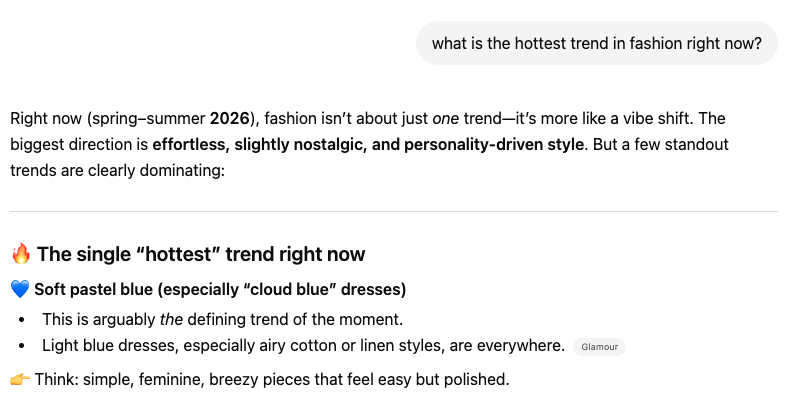
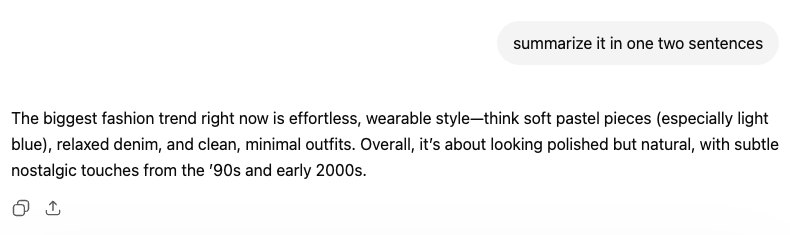
The answer was too long and we re-prompted to give us one-two sentence summary.
"The end game is not just making more products. It is about creating a reasoning engine within your supply chain that understands demand before the first stitch is sewn."
The answer we got from ChatGPT is our starting point.
The biggest fashion trend right now is effortless, wearable style, think soft pastel pieces (especially light blue), relaxed denim, and clean, minimal outfits. Overall, it's about looking polished but natural, with subtle nostalgic touches from the '90s and early 2000s."
Research Scope
Next, we use our platform to start the exploration of the subject matter.

We take our initial goal and the output from ChatGPT to define the intent of the project.
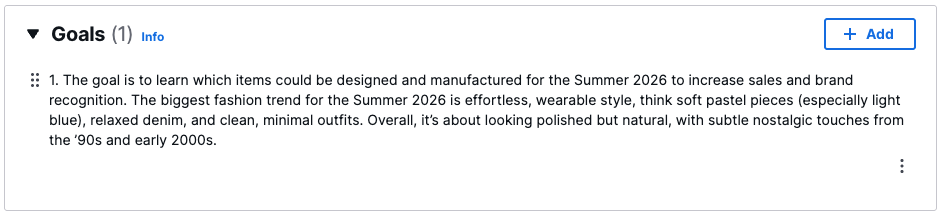
Having defined our goal, we proceed with the generation of topics that align with the goal of our project.
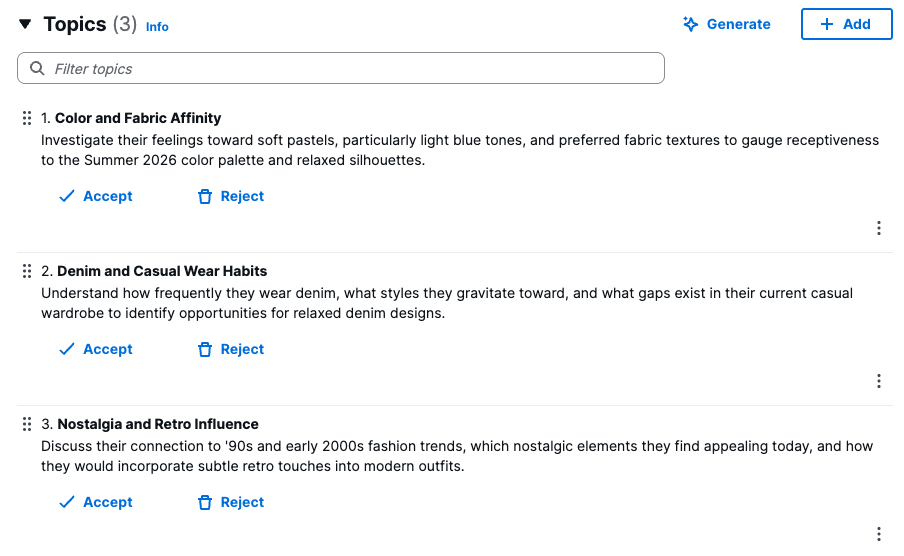
"These generated topics naturally define our target audience. To gain the most relevant insights, we must direct our questions toward our customers."
We will accept the proposed topics and generate some more to see whether there is something interesting there.
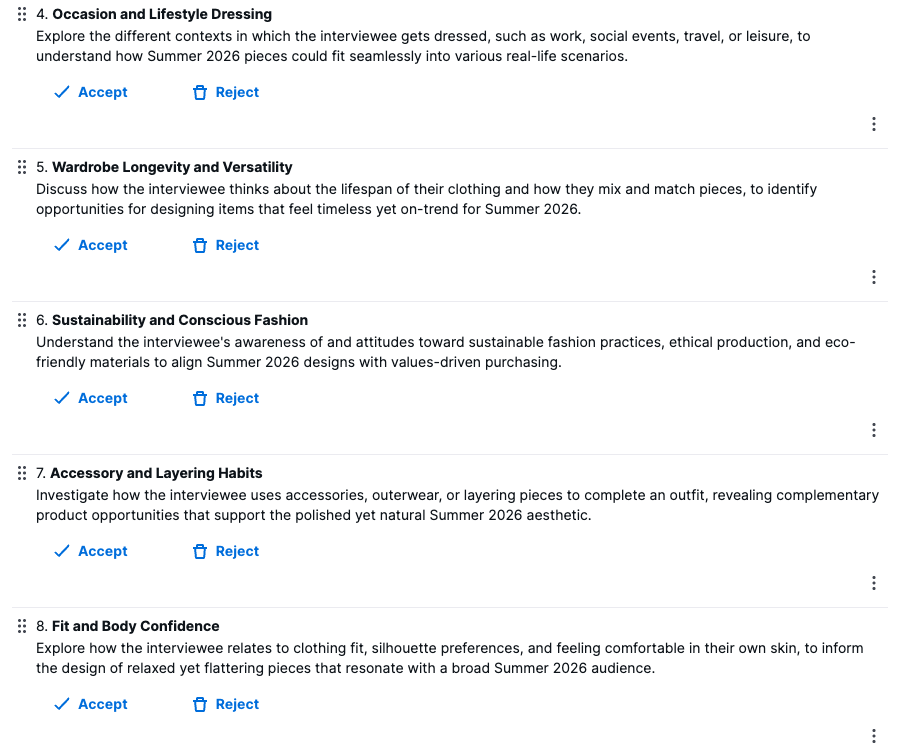
Our research will cover the following topics:
- - Color and Fabric Affinity: Investigate their feelings toward soft pastels, particularly light blue tones, and preferred fabric textures to gauge receptiveness to the Summer 2026 color palette and relaxed silhouettes.
- - Denim and Casual Wear Habits: Understand how frequently they wear denim, what styles they gravitate toward, and what gaps exist in their current casual wardrobe to identify opportunities for relaxed denim designs.
- - Wardrobe Longevity and Versatility: Discuss how the interviewee thinks about the lifespan of their clothing and how they mix and match pieces, to identify opportunities for designing items that feel timeless yet on-trend for Summer 2026.
- - Sustainability and Conscious Fashion: Understand the interviewee's awareness of and attitudes toward sustainable fashion practices, ethical production, and eco-friendly materials to align Summer 2026 designs with values-driven purchasing.
- - Nostalgia and Retro Influence: Discuss their connection to '90s and early 2000s fashion trends, which nostalgic elements they find appealing today, and how they would incorporate subtle retro touches into modern outfits.
- - Occasion and Lifestyle Dressing: Explore the different contexts in which the interviewee gets dressed, such as work, social events, travel, or leisure, to understand how Summer 2026 pieces could fit seamlessly into various real-life scenarios.
- - Fit and Body Confidence: Explore how the interviewee relates to clothing fit, silhouette preferences, and feeling comfortable in their own skin, to inform the design of relaxed yet flattering pieces that resonate with a broad Summer 2026 audience.
- - Accessory and Layering Habits: Investigate how the interviewee uses accessories, outerwear, or layering pieces to complete an outfit, revealing complementary product opportunities that support the polished yet natural Summer 2026 aesthetic.
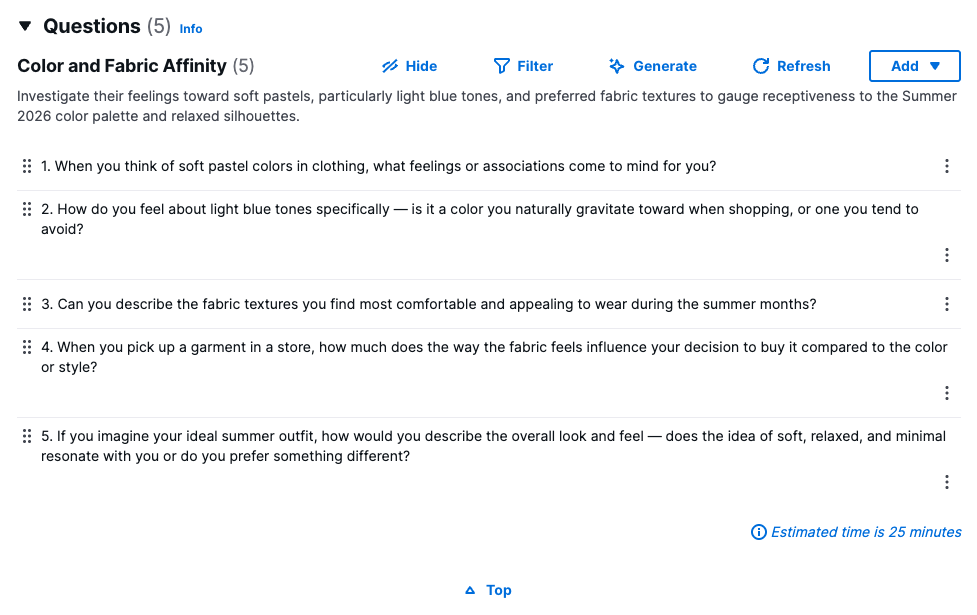
Then, we will generate questions for each of the topics. For example, here are the first set of questions on the topic of "Color and Fabric Affinity".
Personas
Based on the research topics identified for the Summer 2026 cycle, we interviewed three distinct personas that reflect the "effortless and polished" aesthetic while addressing the specific gaps in the current market.
The Conscious Minimalist
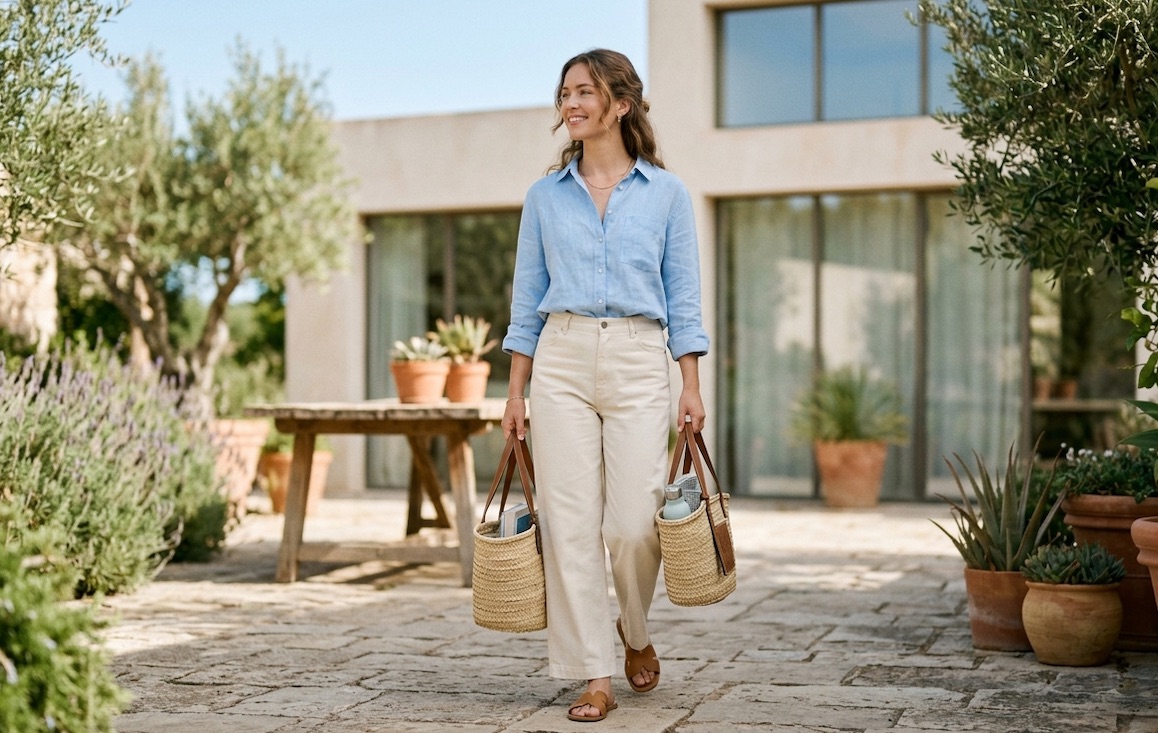
This persona prioritizes Wardrobe Longevity and Sustainability. They view clothing as an investment rather than a trend, seeking high-quality, breathable fabrics like organic linen or recycled cotton. Their affinity for soft pastels, particularly light blue, stems from a desire for a "calm" visual palette that transitions easily from a professional environment to a social setting. They are highly critical of "fast fashion" and prefer pieces that can be mixed and matched across seasons, valuing clean lines over loud branding.
When discussing Fit and Body Confidence, this persona prefers tailored but non-restrictive silhouettes that provide a polished look without the discomfort of rigid structures. For Summer 2026, they are looking for versatile layering pieces, such as lightweight blazers or structured vests, that allow them to adapt to shifting temperatures and occasions. Their connection to Nostalgia is subtle, manifesting in a preference for classic '90s "quiet luxury" rather than the more eclectic Y2K trends.
Using Google Gemini, we are able to generate the "The Conscious Minimalist" look based on the interviewers' responses.
The Nostalgic Trendsetter
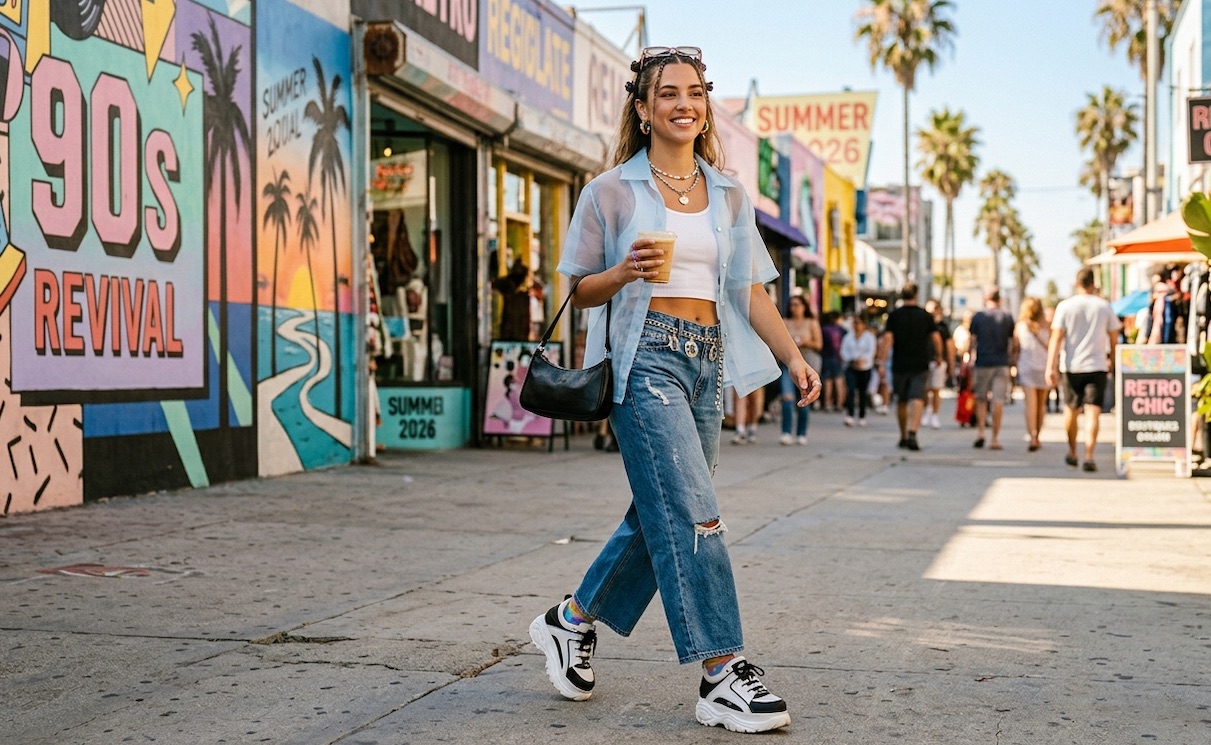
This persona is deeply influenced by Nostalgia and Retro Influence, specifically the "effortless" street style of the late '90s and early 2000s. They have a high Denim and Casual Wear Affinity, gravitating toward relaxed, wide-leg fits and "lived-in" textures. To them, the light blue pastel trend is a perfect match for bleached or acid-wash denim. They value self-expression and use Accessories and Layering, e.g. like chunky belts, baguette bags, or sheer over-shirts, to give a modern edge to retro-inspired outfits.
For this persona, Fit and Body Confidence is tied to movement and a "baggy but intentional" silhouette. They favor "lifestyle dressing" that works for social events and travel, often opting for sets that look polished but feel as comfortable as loungewear. While they are aware of Sustainability, their primary driver is the "vibe" and the aesthetic authenticity of a piece. They are the most likely to experiment with daring fabric textures or experimental layering to achieve a "natural yet curated" look.
Using Google Gemini, we are able to generate the "The Nostalgic Trendsetter" look based on the interviewers' responses.
The Versatile Urbanite
The Urbanite focuses on Occasion and Lifestyle Dressing, requiring a wardrobe that can keep up with a high-energy, multi-context day. They value Color and Fabric Affinity through the lens of utility. Light blues and pastels are favored because they reflect heat and look "fresh" even after a long day of commuting or meetings. Their approach to Denim is functional, they look for denim with a bit of stretch or lightweight blends that can be dressed up with a crisp shirt or down with a simple tee.
Regarding Wardrobe Longevity, they define value by how many "life scenarios" a single item can cover. They are particularly interested in Accessory Habits that allow for quick transitions, such as a scarf or a lightweight technical jacket that fits in a work bag. Their feedback on Fit highlights a need for "smart-relaxed" styles, clothes that are comfortable for walking or sitting for long periods but maintain a sharp, polished silhouette that commands respect in a professional or social setting.
Using Google Gemini, we are able to generate the "The Versatile Urbanite" look based on the interviewers' responses.

From Insights to Production
The journey from a high-level trend to a concrete design requires more than just creative intuition. It demands a structured methodology that bridges the gap between raw data and the consumer's daily lifestyle.
By leveraging our platform to transition from broad AI-generated trends to specific, persona-driven research topics, brands can build a "reasoning engine" that anticipates market needs with remarkable accuracy.
Whether it is the sustainable focus of the Conscious Minimalist or the retro-inspired flair of the Nostalgic Trendsetter, the Summer 2026 catalog is no longer a guess. It is a strategically engineered response to the evolving values of the modern customer.